Collected Interiors
A curatorial practice in Northern Virginia
Antiques & vintage objects for private clients & the design trade
Curated Decor Pieces
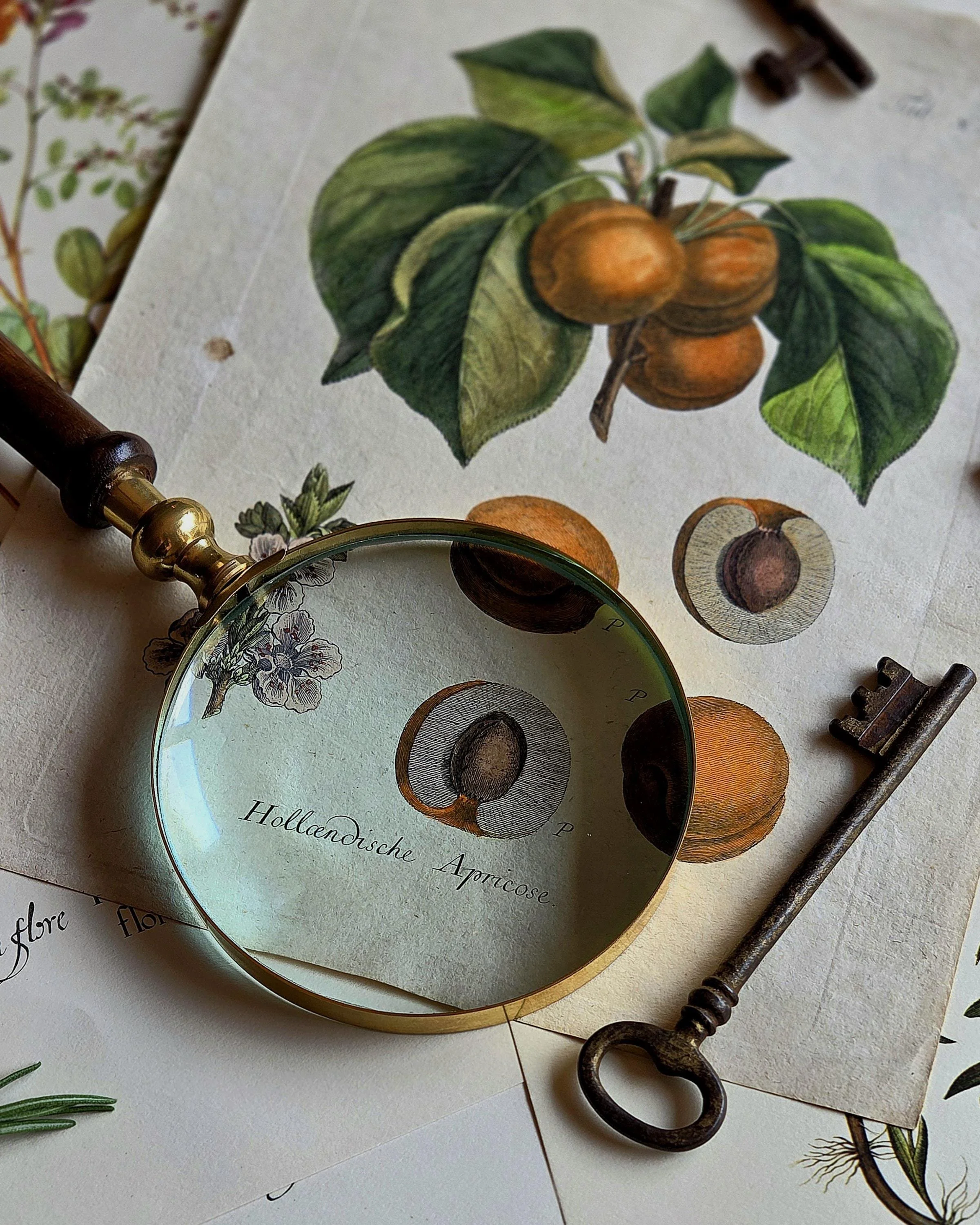
This original hand-colored copperplate botanical engraving from 1776 offers a glimpse into the eighteenth-century pursuit of botanical knowledge, horticultural excellence, and the art of scientific illustration.
The illustration depicts the "Dutch Apricot" and was produced for "Pomona Franconica," a landmark botanical work by Johann Prokop Mayer, royal gardener to the court at Würzburg. Published in three volumes between 1776 and 1801, "Pomona Franconica" documented the fruit varieties cultivated in the royal gardens of Franconia and reflected the eighteenth-century fascination with the careful study and improvement of plants.
This engraving comes from the first volume of the work, published in 1776. Each illustration was individually engraved and hand-colored at the time of publication, requiring the combined skills of botanical artists, engravers, and colorists. Unlike later decorative reproductions, this is an original eighteenth-century print created as part of the publication itself.
The physical characteristics of the paper further preserve its history. The visible plate mark created by the copperplate printing process and the subtle chain lines within the handmade paper provide evidence of its original production and age.
Botanical illustrations such as these served not only as scientific records but also as objects of beauty and refinement. In eighteenth-century European interiors, botanical prints bridged the worlds of scholarship, gardening, and domestic decoration—appearing in libraries, studies, and cultivated homes.
Today, this historic engraving offers a rare opportunity to bring an authentic piece of eighteenth-century botanical art into a collection, reading nook, study, or nature-inspired interior.
Details
Date: 1776
Publication: "Pomona Franconica" Volume I by Johann Prokop Mayer
Subject: Dutch Apricot
Medium: Copperplate engraving with original hand coloring on handmade paper
Origin: Published in Würzburg, Germany; acquired in Madrid, Spain
Measurements: 8 x 10 inches
Authenticity Note
This is an original eighteenth-century copperplate engraving, not a reproduction or later decorative print. Evidence of original production includes the visible plate mark from the copperplate printing process and chain lines within the handmade paper. The engraving was published in "Pomona Franconica" (1776), and the original hand coloring was applied during the creation of the work.
Care
Handle carefully by the edges. Avoid direct sunlight and prolonged exposure to humidity. For long-term preservation, archival framing using acid-free materials and UV-protective glazing is recommended.
Details
This original eighteenth-century botanical engraving has age-appropriate characteristics including minor variations in paper tone, surface texture, and signs of handling consistent with its history. The plate mark and handmade paper characteristics are part of the evidence of its original production and contribute to the authenticity and character of the piece. There is one small instance of age-related discoloration on the front, please see photographs for details.
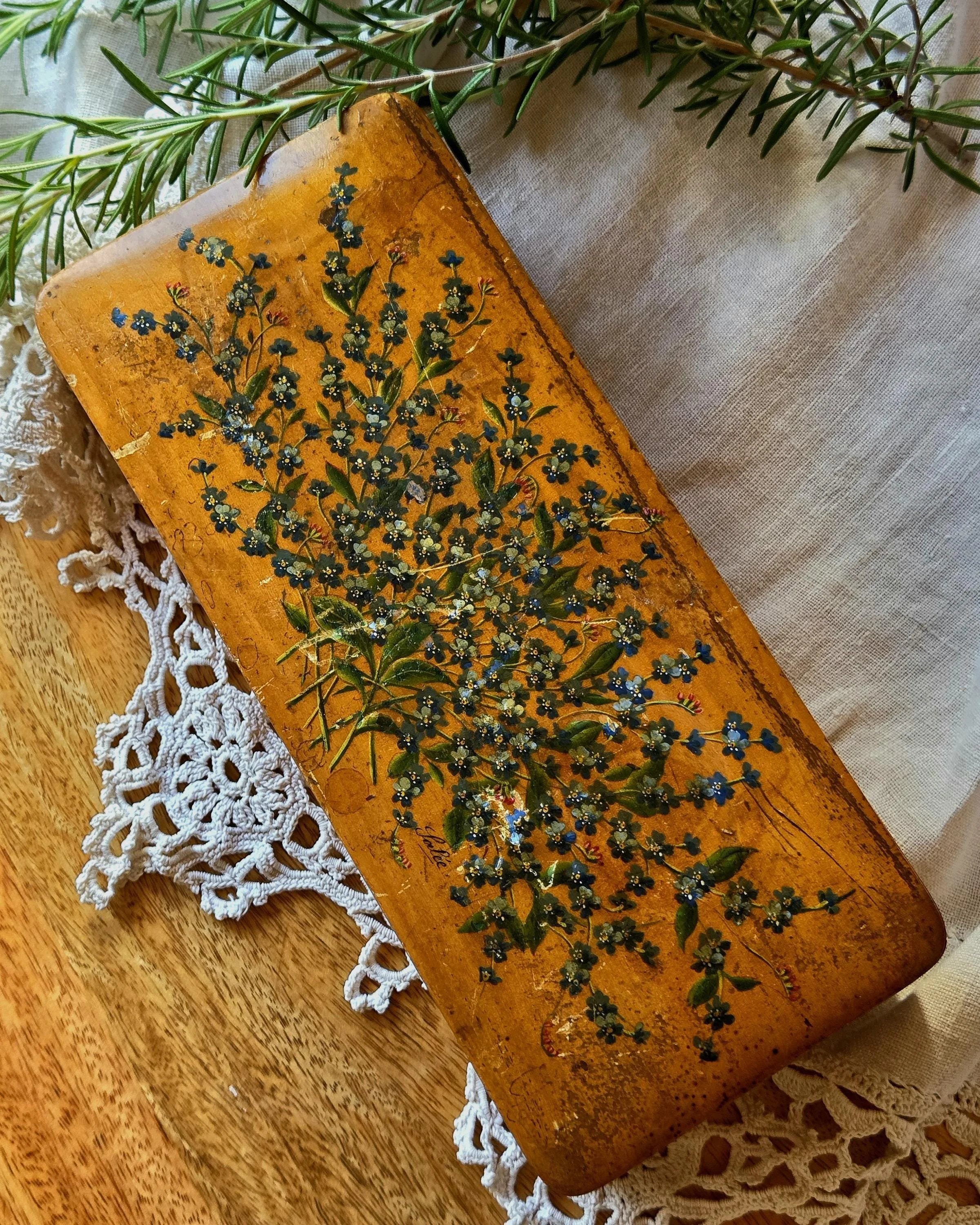
Some objects preserve not only their original purpose, but the emotions attached to them. This hand-painted floral Art Nouveau glove box dates to the Belle Époque era, a period when beautifully crafted domestic objects transformed everyday rituals into moments of elegance, and often functioned as souvenir gifts as well. Sourced in Valencia, this signed box was designed to store and protect gloves, with its original blue satin lining and gently sloped padded interior created to preserve the shape of delicate accessories.
The exterior is crafted from warm honey-toned fruitwood, with a simpler pine base beneath—an intentional construction choice that reflects the balance between craftsmanship and accessibility found in many souvenir and decorative objects of the period. The recessed front lock and hand-painted floral decoration add beauty and interest to an object created for gifting and personal use within the home.
The painted Forget-Me-Not flowers carry a particularly meaningful symbolism. In Victorian floriography, these small blue blossoms represented remembrance, enduring affection, and faithfulness, making them a fitting motif for an intimate keepsake object.
Signed "Salcé," a surname of Basque origin, this box preserves the work of an individual maker while offering a glimpse into the domestic life and sentimental objects of turn-of-the-century Europe.
Before beginning its next chapter, this glove box received careful stabilization. The loose wooden walls and corresponding sections of satin were gently secured using reversible hide glue, a traditional adhesive valued in conservation practices because it respects original materials and allows for future treatment if needed. The goal was not to erase the marks of age, but to ensure the box could continue to be appreciated and used.
Details
Artist/Maker: Signed "Salcé"
Origin: Valencia, Spain
Date: ca. 1895–1915
Period: Belle Époque / Art Nouveau
Materials: Fruitwood exterior, pine base, blue satin lining, painted decoration, recessed metal lock
Measurements: 9.5 x 4 x 2.75 inches
Care
This antique box has been gently cleaned and stabilized while preserving its original materials and aged character. Open and close carefully while supporting the body of the box. Avoid exposure to excessive humidity, direct sunlight, or harsh cleaning products.
Condition
This piece is in good antique condition with expected wear consistent with its age and use. The wooden structure has been stabilized, though minor age-related movement and surface variations remain visible. The original blue satin lining shows appropriate signs of age while retaining its beauty and character.
Please review all photographs carefully, as they are considered part of the description.
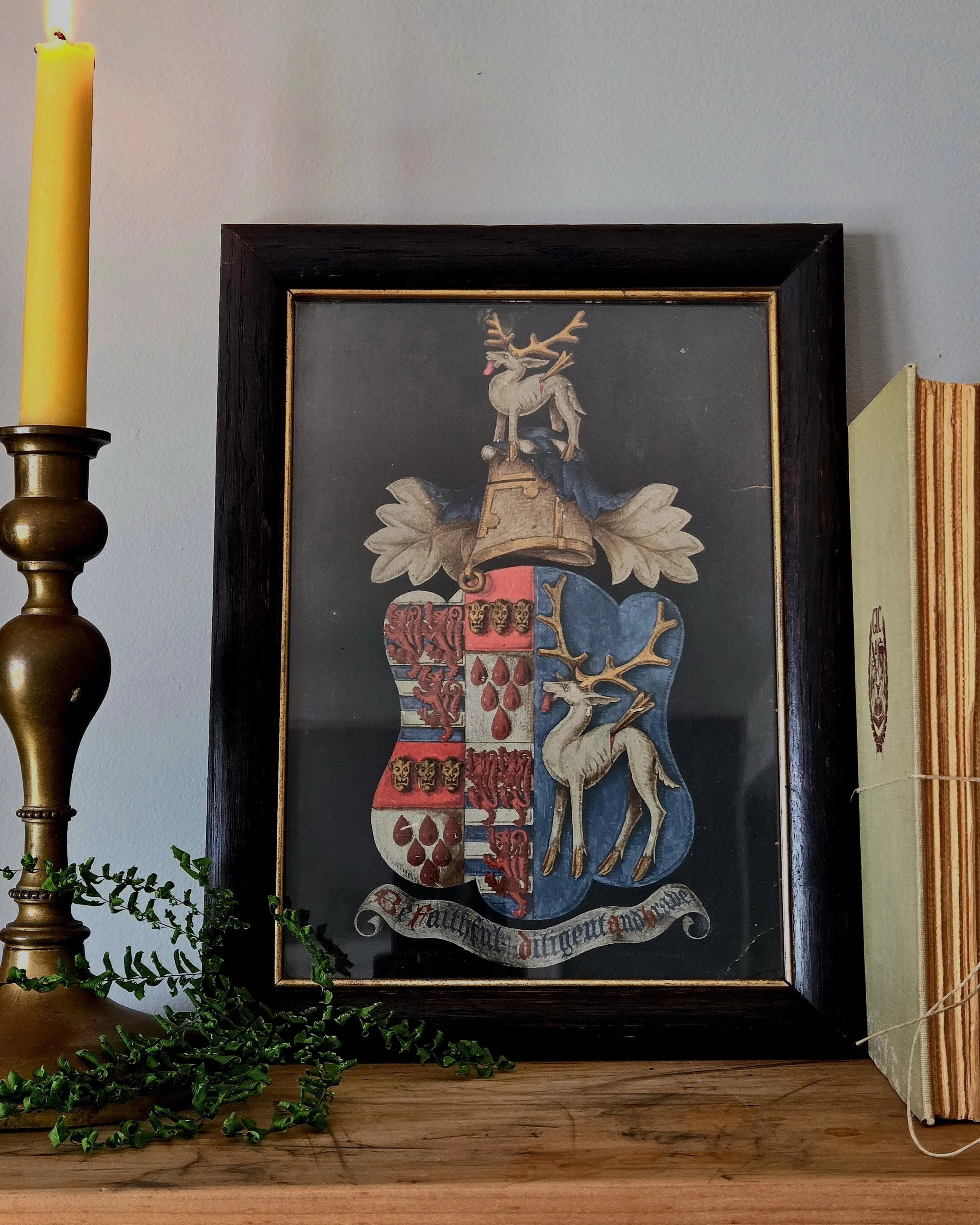
This framed painting is an authentic late-Victorian heraldic work, precisely dated to August 1885 and signed “F.W.S.” in the lower left margin. The piece has accompanying handwritten provenance notes on the reverse tracing its creation and later descent through the Story family of Baltimore, Maryland.
The work is attributed to Frederick Washington Story (1852–1920), a Baltimore-based attorney and member of the New England Historic Genealogical Society. His initials and date appear directly within the composition, reading: “August 1885 FWS.” At the lower right, the inscription “Point Lookout” references the historic Chesapeake Bay resort town in Maryland, suggesting the work was completed there during the summer of 1885.
Further validation appears on the reverse, where a descendant, William E. Story Jr., added a handwritten note dated May 18, 1958 confirming the identity of the artist:
“Under [Sketch of Motto Banner] appears F.W.S. = Frederick Washington Story (1852–1920) / Note by William E Story Jr 5/18/58.”
The heraldic composition features a vertically divided shield beneath the motto “Be Faithful Diligent and Brave.” The left side is quartered with red lions passant, frontal lion faces, and gouttes (heraldic droplets). The right side depicts a stag pierced by an arrow. Above the shield, the motif repeats across a helmet and wreath, reinforcing its formal heraldic structure.
Details
Origin: Lookout Point, Maryland, USA
Artist: Frederick Washington Story (1852-1920)
Date: August 1885
Measurements: 11.5 x 9 inches (outer frame)
Medium: Gouache with silver and gold leaf on artist board
Frame: Wooden frame, painted black with inner gold slip and wire hanger on reverse
Care
Dust gently.
Condition
This framed painting has light, age-appropriate wear. Please look closely at the photos for condition.
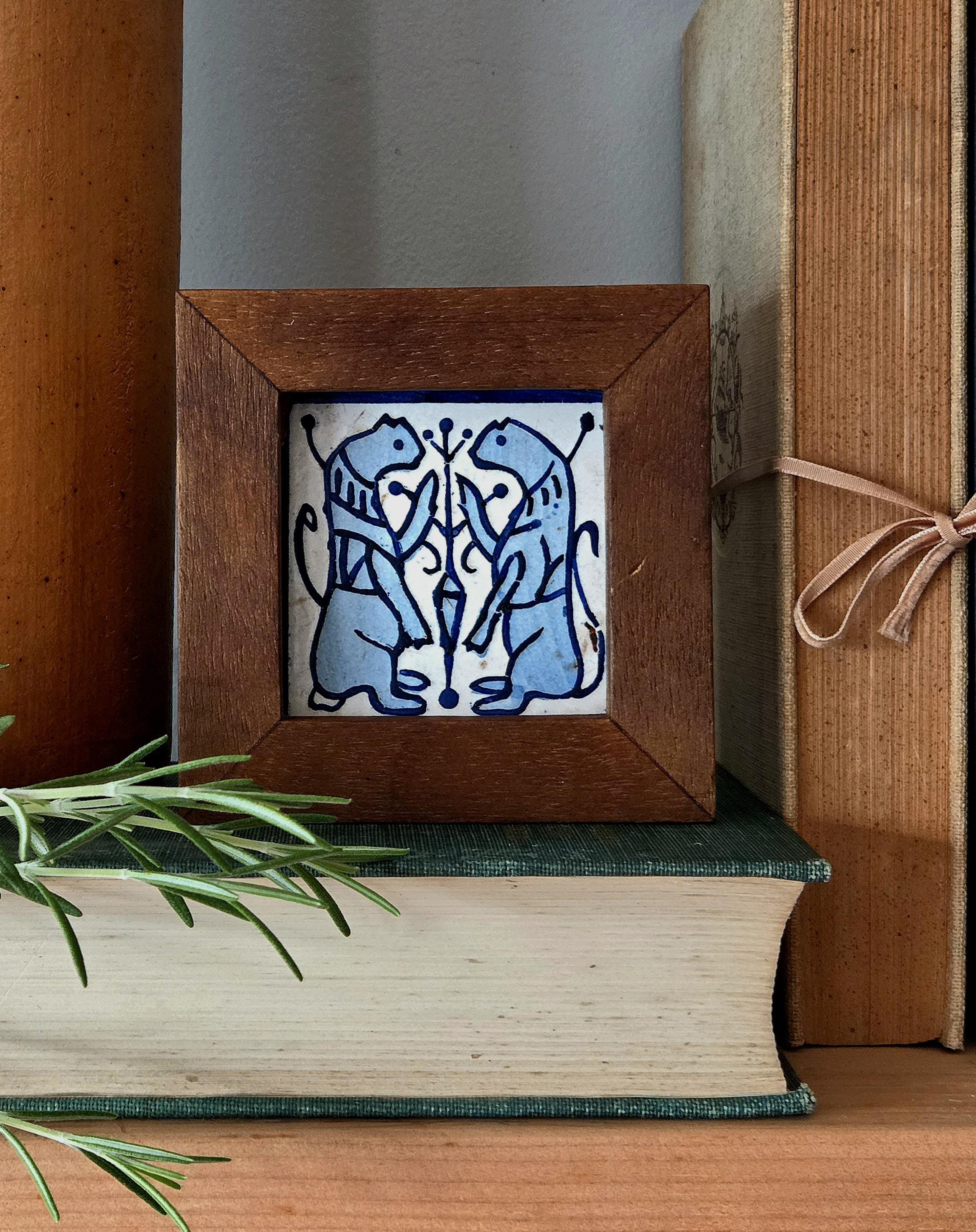
This framed Valencian handmade tile captures the revival of medieval Spanish decorative traditions during the early twentieth century, when artists and craftspeople looked to historic regional forms for inspiration.
Created around 1920, this piece draws from the visual language of traditional Valencian socarrats and medieval ceramic decoration. Its composition features two confronted lions facing one another across a stylized Tree of Life motif, a design that echoes medieval imagery of guardianship, strength, and the connection between the earthly and spiritual realms.
The flat, graphic lines and symbolic arrangement reflect the broader medieval revival movement in Valencia, when historic architectural arts and folk traditions were being rediscovered and reinterpreted for modern interiors. Rather than a medieval survival, this tile represents a later chapter in the ongoing life of those visual traditions.
Presented in a vintage hardwood frame, this piece is ready to display as a small work of Spanish decorative folk art.
Details
Date: ca. 1920
Origin: Valencia, Spain
Medium: Hand-painted ceramic tile
Frame: Vintage hardwood frame with hanging hardware
Measurements: 4.25 x 4.25 x 1.25 inches (including frame)
Care
Dust gently with a soft cloth. Avoid harsh cleaners or prolonged exposure to moisture.
Condition
This vintage framed ceramic tile has age-appropriate wear consistent with its history. The tile and frame have been carefully preserved for display.
Professional Services
Collection Building
A personalized sourcing service for individuals who want to create a meaningful collected interior.
Trade Sourcing Services
Curatorial and acquisition support for creative professionals seeking distinctive historical objects for their projects.
Trade List
A mailing list for creative professionals with benefits such as first access and courtesy holds.